
Keynote Speakers, IAMG Awardees, and IUGG Medalist
Keynote Speakers
- Dr. Arja Jewbali, Head of Global Resource Management, Newmont Corporation, USA
- Prof. Peter Dowd, The University of Adelaide, Australia
- Prof. Tapan Mukerji, Stanford Center for Earth Resources Forecasting (SCERF), and the Stanford Center for Geological Hydrogen (SCGH) projects, Stanford University, USA
- Prof. Louis J. Durlofsky, Department of Energy Science and Engineering, Stanford University, USA
IAMG Awardees
- Prof. Peter Atkinson, Lancaster University, UK - Krumbein Medal 2026
- Prof. Denis Allard, INRAE, France - Georges Matheron Lecturer 2026
- Mr. Mohan Srivastava , Resource Estimation Consultant, RedDot3D Inc. - Distinguished Lecturer 2027
IUGG Medalist
- Prof. Ebru Bozdağ, Colorado School of Mines, USA - IUGG Vladimir Keilis-Borok Medal 2026
Keynote Speakers↑
Arja Jewbali↑
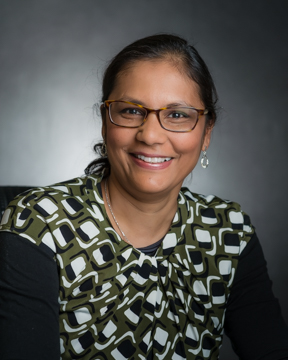 Arja Jewbali is Head, Resource Management, Global for Newmont. She holds a Doctorate in Geostatististics from the University of Queensland and has close to 20 years of experience having worked extensively across gold, silver, iron ore, and base metal deposits. Throughout her career, she has built and audited resource models, led global teams, and developed geostatistical best practices that improve mine planning outcomes.. Before joining Newmont in 2011 she was employed by Rio Tinto Iron Ore in a number of positions including Resource Geologist and Senior Geostatistician. She has co-authored multiple papers on geostatistics and resource modeling.
Talk title: From Resource Models to Resource Decisions: Why the Industry struggles with Embracing Resource Uncertainty
Mining companies routinely make billion-dollar decisions using resource models that simplify complex geological uncertainty into a single estimate. This presentation explores why uncertainty remains difficult to incorporate into mine planning and how deterministic planning approaches can create false confidence, leading to operational underperformance and value loss. Drawing on industry case studies and Newmont's experience, it examines the sources of resource model uncertainty, how uncertainty propagates through the mining value chain, and the limitations of current planning workflows that rely on averaged inputs for inherently non-linear decisions. The presentation makes the case for stochastic mine planning as a framework for quantifying and managing uncertainty through multiple geological realizations, enabling more robust and resilient mine plans. Finally, it discusses the technological, organizational, and cultural changes required to transition from building better models to making better decisions under uncertainty.
Peter Dowd↑
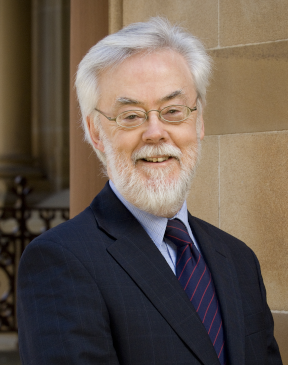 Professor Peter Dowd is Professor of Mining Engineering at the Adelaide University, Australia. Prior to his current appointment, he worked at universities in Canada and the UK. He is currently Director of the Australian Research Council Industrial Transformation Training Centre for Integrated Operations for Complex Resources at the University of Adelaide. He is an elected Fellow of the Royal Academy of Engineering and an elected Fellow of the Australian Academy of Technological Sciences and Engineering. His research areas are in mathematical geosciences applied to natural resources and to environmental and climate variables. More recently, in collaboration with European colleagues, he has published widely in hydrology, groundwater, climatography, fractal analysis of karst landscapes, closed depressions on the surfaces of the moon and Mars, and fractal analysis of the Martian landscape. He was awarded the 2016 IAMG Krumbein Medal for his contributions to geostatistics and mathematical geosciences. He was President of the IAMG for the period 2020-2024 and is currently Past-President of the IAMG for 2024-2028.
Talk title: Australian Research Council Industrial Transformation Training Centre for Integrated Operations for Complex Resources
Training Centres are awarded in industry priority areas determined by the Australian Research Council (ARC) and include Mining Equipment, Technology and Services (METS) and Critical Minerals Processing. The Training Centre was awarded in 2020 and was formally launched on 9th July 2021. It has an award of $3.75 million from the ARC and $8.05 million in cash and in-kind from company, university, government and technology stakeholders across the mining sector in Australia. It has funding for 17 PhD projects and three Post-Doctoral Researcher positions. The Training Centre was hampered in appointing PhD scholars by the COVID pandemic. Due to the delay in the appointments the ARC extended the initial four-year period to six years, and it will formally finish on 31st August 2026. However, as good PhD scholars graduate they are offered Post-Doctoral research positions to continue their work beyond the ARC completion date, which will allow the Training Centre to continue for a further year. The Training Centre focusses on integration and inter-disciplinarily and the fundamental approach is mining as an integrated system.
Tapan Mukerji↑
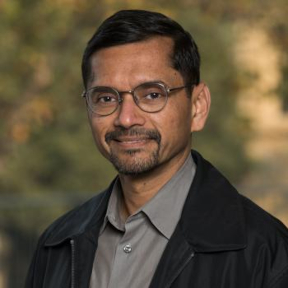 Tapan Mukerji is a Professor (Research) in the Departments of Energy Science & Engineering, Geophysics and Earth & Planetary Sciences at Stanford University. He received his B.S, Physics, and M.S. (Tech.), Geophysics from BHU, India, and his Ph.D. in Geophysics from Stanford University. The focus of Mukerji’s multi-disciplinary research, with students and colleagues, has been on integrating rock physics, wave propagation physics, spatial data science, and machine learning and their broad applications in subsurface characterization, stochastic geomodeling, uncertainty quantification and value of information in Earth sciences. He uses theoretical, computational, and statistical methods, to discover and understand fundamental relations between geophysical data and rock properties, to quantify uncertainty in subsurface models, and to address value of information for decision making under uncertainty. Prof. Mukerji was awarded the Society of Exploration Geophysicists’ Karcher award in 2000 and the ENI award in 2014 for pioneering innovations in theoretical and practical rock physics for seismic reservoir characterization. He co-directs the Stanford Center for Earth Resources Forecasting (SCERF), and the Stanford Center for Geological Hydrogen (SCGH) projects.
Talk title: Advances in generative AI for multi-scale geomodelling: Challenges & Pitfalls
Reservoir geomodelling plays a critical role in various applications, including hydrocarbon exploration, geological storage of CO2, hydrogen exploration, geothermal energy development, groundwater management, and contamination disposal. Geomodelling is fundamentally a process of integrating diverse sources and forms of data and information, such as geological knowledge, borehole interpretations, geophysical data, and temporal well production data. Despite the availability of these data types, the data are often insufficient to fully capture the complexity, high-dimensionality, and multi-scale nature of subsurface systems. As a result, uncertainty persists even when all collected data sources are effectively integrated. In recent years, generative AI systems have been trained to learn the statistical and physical structure of the Earth from large ensembles of synthetic geological models and physics-based simulations. These models combine sparse hard constraints with dense indirect observations as well as physics-informed loss functions to infer plausible three-dimensional geological structures while quantifying uncertainty. The talk will address some of the challenges and pitfalls of using generative AI for subsurface modeling and provide some recommendations to avoid the pitfalls. .
Louis J. Durlofsky↑
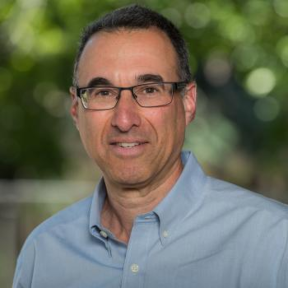 Louis J. Durlofsky is the Otto N. Miller Professor of Earth Sciences in the Department of Energy Science and Engineering at Stanford University. He co-directs the Stanford Smart Fields Consortium and the Stanford Center for Carbon Storage. Earlier in his career, Durlofsky was affiliated with Chevron Energy Technology Company. He holds a BS degree from Pennsylvania State University, and MS and PhD degrees from Massachusetts Institute of Technology, all in chemical engineering. His research interests include subsurface flow simulation, geological carbon storage, data assimilation and uncertainty quantification, optimization, and deep learning-based surrogate modeling.
Talk title: Data assimilation for subsurface flow using deep learning-based surrogate models
Data assimilation, also referred to as history matching in subsurface flow applications, entails the calibration of initial conceptual geomodels such that flow predictions match measurements. This is a key step in the modeling and computational optimization of subsurface operations such as oil production and geological carbon storage. Measured data can include time-varying well flow rates, in-situ pressure and saturation observations, surface displacement, and time-lapse seismic data. In this talk, I will present some of our recent work on the use of very fast surrogate models in combination with formal Monte Carlo-based methods for data assimilation in subsurface flow. Surrogates are essential in this setting because Monte Carlo-based history matching can require O(100,000) function evaluations (simulations). The history matching applications I will discuss include megatonne-scale carbon storage in representative offshore faulted aquifers with data from in-situ measurements, carbon storage in onshore aquifers with surface displacement data, and oil production in a large, channelized reservoir with well-rate data. In the latter case, Monte Carlo-based history matching will be compared to traditional ensemble-Kalman methods.
IAMG Awardees↑
Peter Atkinson - Krumbein Medal↑
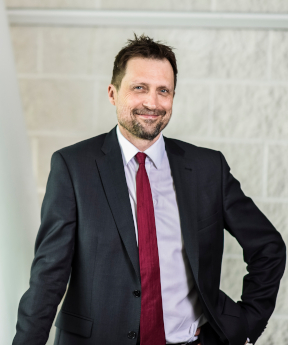 Peter Atkinson is Distinguished Professor of Spatial Data Science at Lancaster University, Lancaster, UK where he was also Executive Dean of the Faculty of Science and Technology from 2015 to 2025 and interim Executive Dean of the Faculty of Health and Medicine from 2018 to 2019. Professor Atkinson’s research interests are highly interdisciplinary with a focus on methods for remote sensing, spatial statistics and artificial intelligence applied to a wide range of grand challenge-motivated questions in science, including in land systems, natural hazards, agriculture, ecology and epidemiology. He is highly regarded for his research on geostatistical change-of-support theory and downscaling in Earth observation. Professor Atkinson is a Fellow of the Learned Society of Wales and is an inaugural highly ranked scholar on ScholarGPS (2024, 2025) and ISI highly cited researcher (2023, 2024). He received the Cuthbert Peek Award of the Royal Geographical Society-Institute of British Geographers (RGS-IBG) in 2024, was the 2020 Distinguished Lecturer of the International Association of Mathematical Geosciences (IAMG), and Laureat of the Peter Burrough Medal of the International Spatial Accuracy Research Association (ISARA) in 2016. He was awarded the Belle van Zuylen Chair with Utrecht University, Utrecht, The Netherlands in 2014 and was Visiting Fellow at Green-Templeton College, Oxford University 2012-14. Professor Atkinson is founding Editor-in-Chief of Science of Remote Sensing and Associate Editor of Environmetrics.
Talk title: Downscaling Earth Observation Data to Investigate Global Urban Resilience to Shocks
Urban resilience determines the ability of cities to bounce back after global shocks such as the COVID-19 pandemic. Yet how urban resilience varies between cities across the globe, across economic sectors and geographical contexts, remains poorly understood at the global scale. Here, the COVID-19 lockdowns were used as a natural experiment. The disruption to business and social activities are specifically the interest using the periods “before” and “after” the lockdowns as controls and the lockdowns themselves as the experiment. The COVID-19 pandemic itself, while of huge significance, is not the interest here. Monthly time-series satellite-derived nighttime light images were downscaled using geostatistical area-to-point regression Kriging (ATPRK) for 48 major cities globally such as to allow meaningful intersection with economic sector type data. The downscaled time-series were then analyzed to create sector-specific time-series trajectories between 2018 and 2023 (i.e., around the COVID-19 lockdowns) for 98 city–sector combinations.
The analysis identified four archetypal sectoral trajectories that capture distinct recovery responses, and revealed two dominant dimensions structuring recovery outcomes: economic essentiality and sectoral structure. Recovery was strongly polarized by business essentiality, with “resilient” trajectories concentrated in essential economic sectors, and “chronic decline” disproportionately associated with non-essential sectors, particularly in Europe. A pronounced global divergence emerged, as cities in Latin America and Asia consistently exhibited “resilient” or “full recovery” trajectories, in contrast to widespread and persistent sectoral “chronic decline” across European cities.
This research, thus, reveals and quantifies the (hidden) economic resilience of major cities across the globe, and explains the basis for the observed variation. The dependence of urban resilience on business essentiality, which itself varies greatly between major cities, was not quantified previously. The new understanding has serious implications for macro-economic planning.
Denis Allard - Georges Matheron Lecturer 2026↑
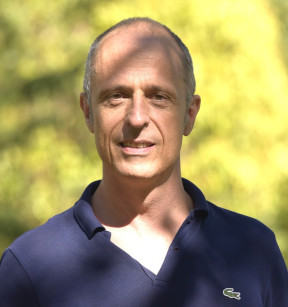 Denis Allard is Research Director at INRAE, the French National Research Institute for Agriculture, Food and the Environment. He holds a Master of Science and a PhD from the Ecole des Mines de Paris, France. He had appointments in the Statistics Department, University of Washington (Seattle, USA) and worked with British Petroleum as Geostatistician. He joined INRAE in Avignon in 1996 and found it to be an excellent place for research. He never left. From 2005 to 2011 he has been the head of the BioSP (Biostatistics and Spatial Processes) research unit at INRAE, Avignon. Recent contributions include the characterization of anisotropy for random fields, new classes of multivariate space-time cross-covariance functions, efficient geostatistical simulation algorithms in various settings, SPDEs for spatio-temporal data, flexible geostatistical methods for compositional data and aggregation of distributions in climate science. He is currently associate editor for Spatial Statistics and has served on its editorial board since the journal was launched in 2012. He has been associate editor for Computing and Statistics and Mathematical Geosciences. His research covers a wide range of topics in geostatistics and spatial statistics for modeling and analyzing spatio-temporal data, with applications in geosciences, environment and climate sciences. Currently, he is the Principal Investigator of the Geolearning Chair, a joint research program between BioSP and the Geostatistics team at Ecole des Mines de Paris.
Talk title: From probability aggregation in geosciences to ensemble aggregation in climate sciences
Combining diverse sources of information within a probabilistic framework is a cornerstone of earth sciences, with applications ranging from oil and gas exploration to climate modeling. In the exploration stage of the oil and gas industry, geological observations, geophysics, remote sensing, and training images each provide conditional probabilities of oil presence. Aggregating these probabilities into a unified estimate approximates the inaccessible true conditional probability given all available information. This talk reviews and compares aggregation methods—such as linear and log-linear pooling—highlighting their mathematical properties and trade-offs.
The quality of aggregated probabilities is evaluated using metrics from the weather forecasting community: calibration, sharpness, and reliability. These concepts are illustrated through a real-world exploration dataset, demonstrating their practical relevance.
The discussion then extends to the aggregation of cumulative distribution functions (CDFs), focusing on multi-model ensembles for projecting 21st-century climate distributions. Here, the problem is reframed using proper scoring rules and optimal forecast aggregation, leading to the introduction of alpha-pooling—a novel method that generalizes linear and log-linear pooling via a tunable parameter, alpha. This flexibility allows alpha-pooling to adapt to diverse situations, as demonstrated through its application to temperature and precipitation CDFs from five Global Climate Models.
If time permits, connections will be drawn to the alpha-IT transform, a recent advancement in compositional data analysis that generalizes the isometric log-ratio (ILR) transform, further bridging probabilistic aggregation and data transformation techniques.
Mohan Srivastava - Distinguished Lecturer 2027↑
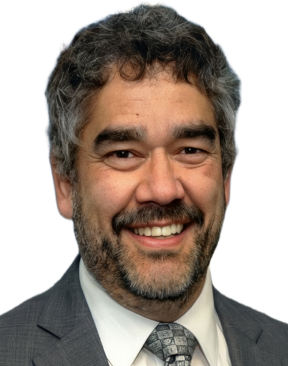 Mo is an author of “An Introduction to Applied Geostatistics”, and of more than 50 technical articles on the theory and practice of geostatistics. He has applied geostatistics to mineral deposits, petroleum reservoirs, environmental contamination, climate change, animal populations and epidemiology. He has taught geostatistics in public short courses and in several universities, most recently at the Universitat Politècnica de València. Outside of his day-job as a consultant, Mo “cracked the code” of an instant scratch lottery game, allowing him to separate winners from losers without scratching anything off the face of the cards (www.wired.com/2011/01/cracking-the-scratch-lottery-code). He also finds time to write, and is the 2013 winner of the Canada Writes Prize for Non-Fiction for his short story "The Gods of Scrabble" (www.cbc.ca/books/the-gods-of-scrabble-by-mo-srivastava-1.4112595). In 2016, Mo was chosen by the Professional Geoscientists of Ontario as the inaugural recipient of their Award of Merit for significant career contributions to geosciences. He was chosen by the Society of Mining Engineers as the 2025 recipient of the Harry Parker Award of Excellence for outstanding communication of geostatistical and spatial statistical concepts.
Talk title: Regional assessment of mining potential for the Ring of Fire region in Northern Ontario
IUGG Medalist↑
Ebru Bozdağ - IUGG Vladimir Keilis-Borok Medal 2026↑
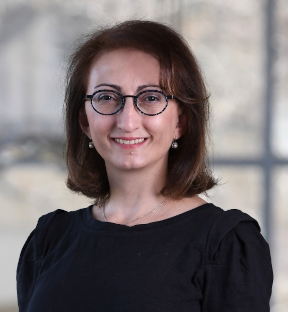 Ebru Bozdağ is an Associate Professor in the Department of Applied Mathematics and Statistics with a joint appointment in the Department of Geophysics at the Colorado School of Mines, USA. Earlier Bozdağ was a tenured Associate Professor (Maître de Conférence) and held a Chaire d'Excellence position at Géoazur, University of Côte d'Azur, Nice, France, and an Associate Research Scholar at Princeton University, USA. She earned her PhD in Seismology from Utrecht University, The Netherlands, and MSc/BcS in Geophysics from Istanbul Technical University, Türkiye. Bozdağ's research focuses on computational and global seismology, leveraging 3D seismic wave simulations to advance our understanding of Earth's and other planets' internal structures and dynamics and mitigate seismic hazards. She aims to improve existing tomographic and observational techniques, develop new methodologies, and apply them to seismic observations to construct multiscale and multiparameter tomographic models, with a particular emphasis on global full-waveform inversions to image Earth's mantle. Her work heavily relies on high-performance computing, seamlessly integrating large-scale numerical simulations and optimization techniques with large, heterogeneous datasets to harness computational power and big data in seismology to address geoscientific problems.
Talk title: Global Seismology in the Era of High-Performance Computing: Full-Waveform Modeling Insights into Earth’s Deep Interior
Advances in numerical methods and solvers for seismic wave propagation, and high-performance computing have been transformative for seismology, enabling us to account for the full complexity of wave propagation in seismic tomography and leading to the development of first-generation global full-waveform models. While we can successfully address the intricacies of wave propagation, the next step is to incorporate better physics also in inversions through appropriate parameterization. In this presentation, we will outline our efforts to explore the Earth’s interior, from sedimentary basins to the outer core, using 3D full-waveform modeling and construction of next-generation mantle models focusing on the interpretation of upper-mantle anisotropy based on our recent radially and azimuthally anisotropic global full-waveform inversion model. We will also discuss the next challenges in global seismology, and how to further improve the resolution of global tomographic models in the context of parameterization, trade-off between seismic parameters, and integration of emerging data in full-waveform inversions to tackle the global data coverage problem, to have better constraints on the dynamics and the thermochemical structure of the Earth’s deep interior.
IAMG2026 sponsored by: